
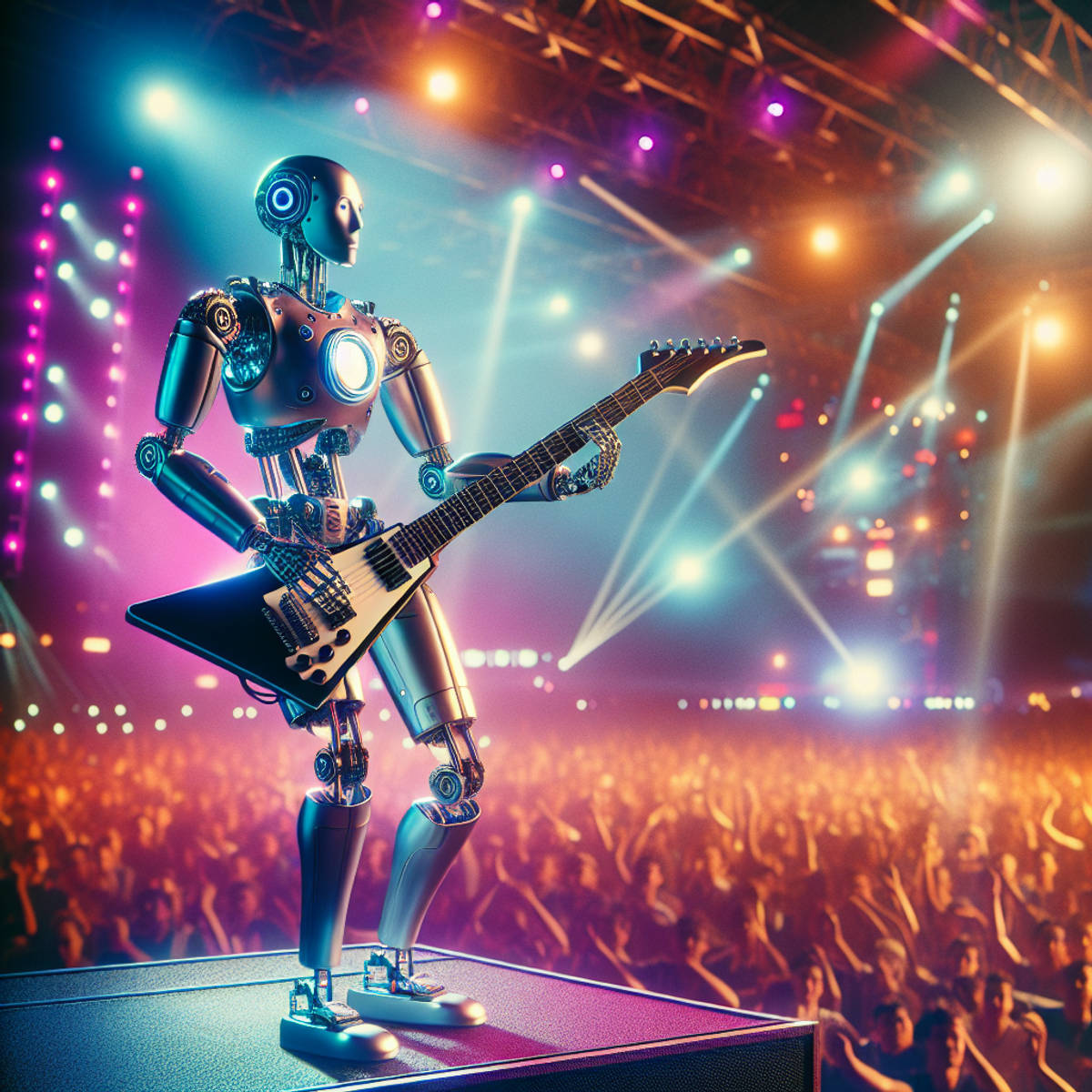
Imagine this: you’re at a buzzing music festival, the crowd’s energy is electric, and the band is about to start. But instead of a human musician stepping up to the keyboard, a humanoid robot named Adam takes center stage, keytar in hand. Sounds like a scene from a sci-fi movie, right? Well, it happened.
Meet Adam, the Robotic Keytarist
Adam isn’t your average robot. Standing at 1.6 meters tall and weighing around 132 pounds, Adam was developed by PNDbotics. This robot isn’t just about looks; it’s equipped with 25 patented quasi-direct drive (QDD) PND actuators, allowing for impressive agility and precision. Each actuator has advanced force control, enabling Adam to move with a fluidity that’s eerily human-like. (interestingengineering.com)
The Big Debut
On July 12, 2025, at the Changchun stop of the VOYAGEX Music Festival in China, Adam made its musical debut. Performing alongside renowned Chinese musician Hu Yutong’s band, Adam took on the role of the keytar player. The performance was a blend of technology and artistry, with Adam’s fingers dancing over the keys in perfect harmony with the band. (interestingengineering.com)
A Glimpse into the Future
This isn’t the first time robots have shared the stage with humans. Back in 2017, a robot named YuMi conducted an orchestra alongside Andrea Bocelli. (classicfm.com) And in 2023, a humanoid robot named EveR 6 took the baton to lead an orchestra in Seoul. (interestingengineering.com) These instances hint at a future where robots and humans collaborate more closely in creative fields.
Why It Matters
Integrating robots like Adam into live performances isn’t just a novelty; it opens up new possibilities for the entertainment industry. Robots can perform repetitive tasks with precision, reducing the physical strain on human musicians. They can also introduce new sounds and techniques that might be challenging for humans to execute.
The Human Touch
However, while robots can mimic human movements and play instruments, the emotional depth and spontaneity that human musicians bring to a performance are irreplaceable. The soul of music lies in its imperfections, the slight variations, and the emotional connection between the performer and the audience.
Looking Ahead
As technology continues to evolve, we might see more collaborations between humans and robots in the arts. Whether it’s a robot playing the drums, dancing alongside humans, or even composing music, the possibilities are vast. But one thing’s for sure: the fusion of technology and art will continue to surprise and inspire us.
So, next time you’re at a concert, don’t be too surprised if a robot joins the band. After all, the future of music might just be a blend of metal and melody.


Leave a Reply