
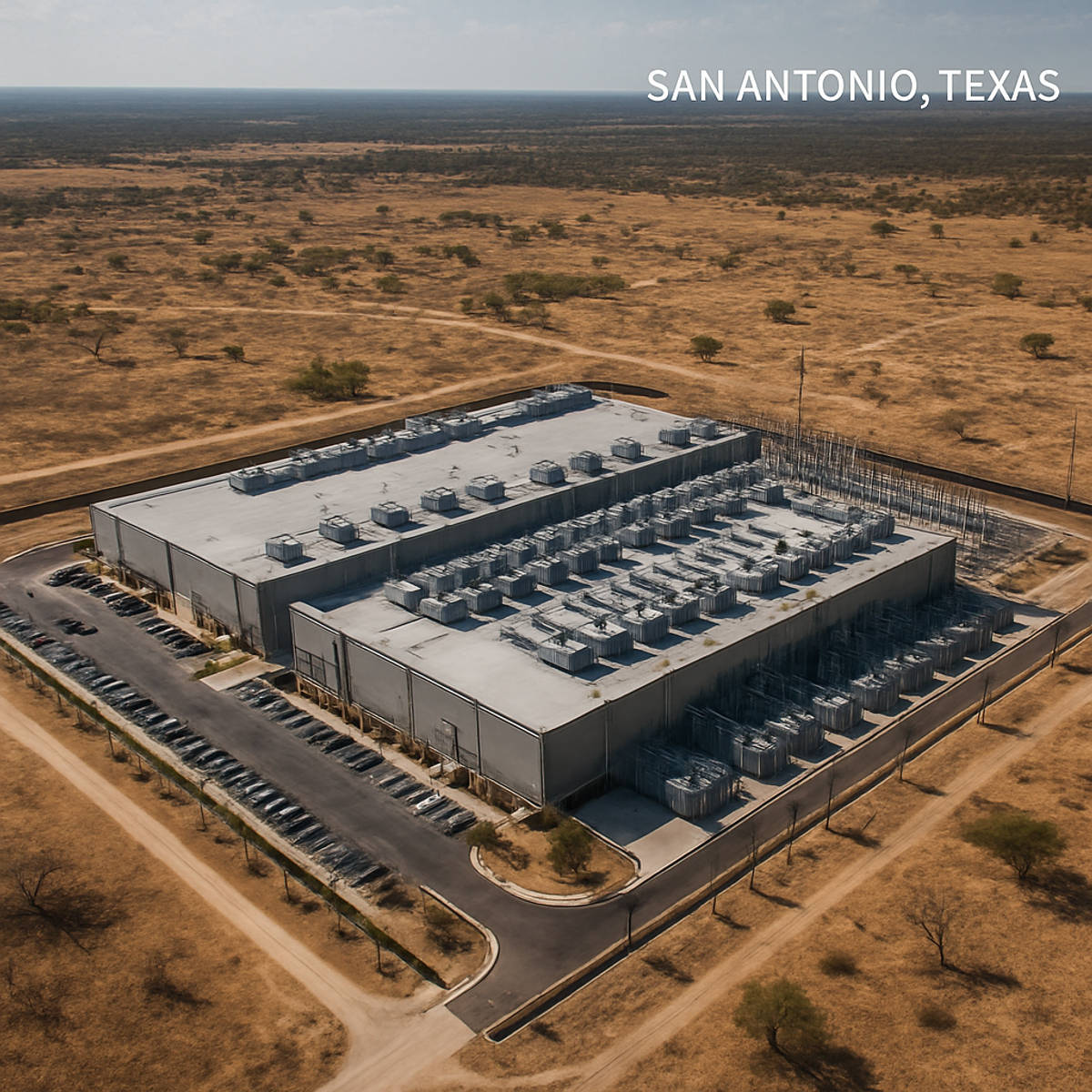
Hey there! Have you ever thought about what keeps our digital world running smoothly? It’s data centers—those massive facilities that store and process all the information we access daily. But here’s something that might surprise you: these data centers consume a significant amount of water to keep their servers cool. And in places like San Antonio, Texas, where droughts are a real concern, this becomes a pressing issue.
The Thirst of Data Centers
Data centers rely on cooling systems to prevent their servers from overheating. Many use evaporative cooling, which, as the name suggests, involves water evaporation to dissipate heat. This method is effective but water-intensive. For instance, a single 100-megawatt data center can use up to 2 million liters of water per day—equivalent to the daily consumption of about 6,500 households. (techrepublic.com)
San Antonio’s Situation
In San Antonio, data centers have been under scrutiny for their water usage. Reports indicate that in 2023, 19 data center facilities in the San Antonio Water System’s (SAWS) service area consumed about 31 billion gallons of potable water and 151 million gallons of recycled water. (sanantonioreport.org) While this accounts for just 0.25% of all commercial accounts’ water use, it’s still a notable figure, especially during periods of drought.
Drought and Water Scarcity
Texas has been grappling with severe drought conditions. As of June 2025, areas including San Antonio faced exceptional drought—the most extreme level. (axios.com) This makes the water consumption by data centers even more concerning, as every drop counts during such times.
Balancing Growth and Conservation
The tech industry isn’t blind to these challenges. Companies like Microsoft have been working on water conservation strategies. For example, Microsoft’s data center in San Antonio implemented a site-specific water efficiency and quality plan, partnering with Nalco Water to reduce overall operating costs and water usage. (ecolab.com)
However, the effectiveness of these measures is still a topic of debate. Some experts are skeptical about the claims of reduced water usage, especially with the rapid expansion of data centers in water-scarce regions. (austinchronicle.com)
Looking Ahead
As our reliance on digital services grows, so does the need for data centers. It’s crucial for tech companies, policymakers, and communities to collaborate on sustainable solutions. This includes exploring alternative cooling technologies, implementing stricter water usage regulations, and increasing transparency about water consumption.
In the end, it’s about finding a balance—ensuring our digital infrastructure can support our needs without compromising the environment and resources of the communities they inhabit.
Note: The information in this post is based on various reports and articles up to July 2025.



Leave a Reply