
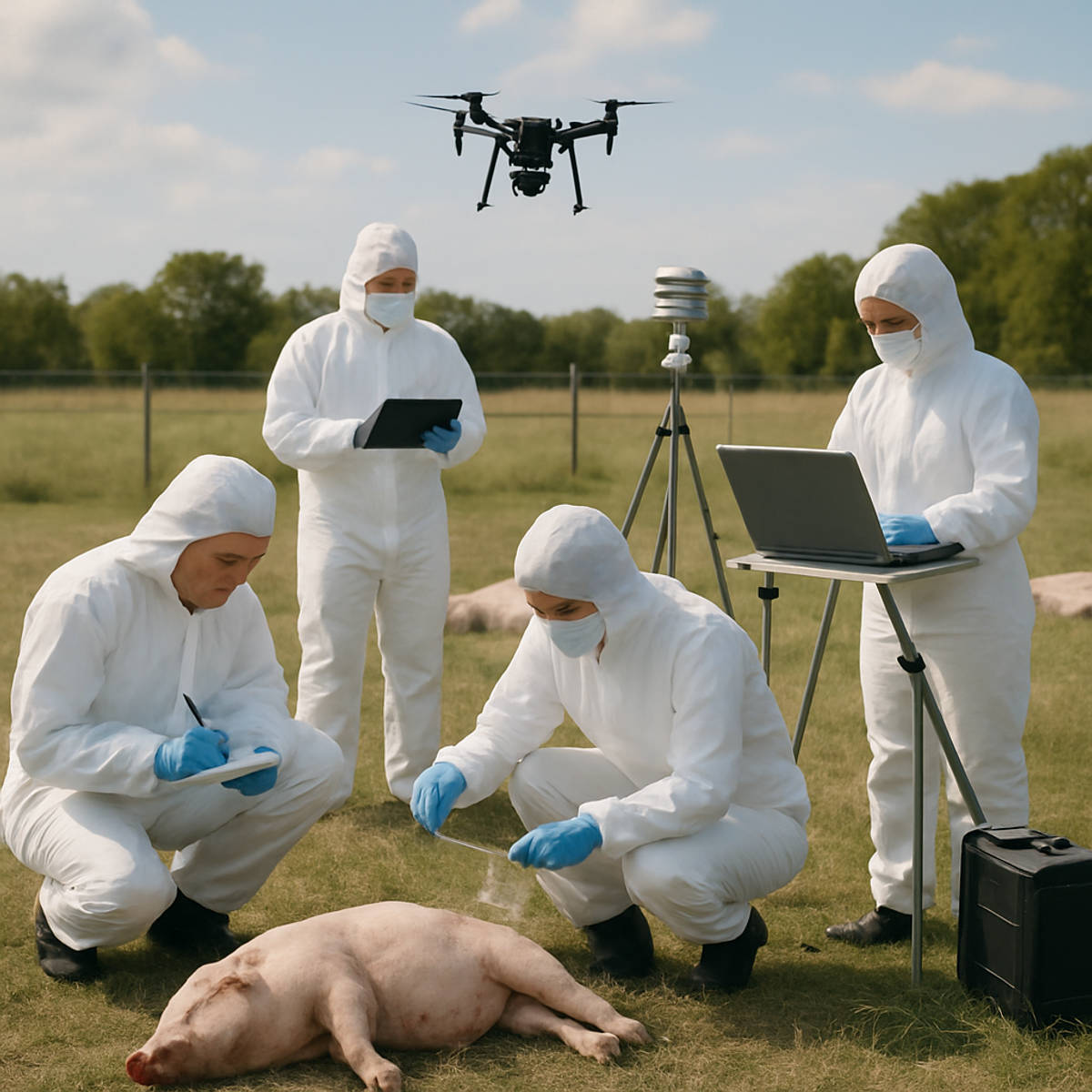
Imagine this: scientists in Mexico are dressing pigs in clothes, burying them, and then watching what happens. Sounds odd, right? But there’s a deeply serious reason behind it.
The Heartbreaking Reality
Over 130,000 people have gone missing in Mexico since 2006, many believed to be victims of cartel violence. Families are left in anguish, searching for answers that often never come. (nbcdfw.com)
Why Pigs?
Pigs are anatomically similar to humans, making them ideal stand-ins for studying decomposition. By observing how pig bodies break down under various conditions—like being wrapped in blankets, burned, or buried in different soils—scientists can gather clues about clandestine graves. (abcnews.go.com)
High-Tech Helpers
It’s not just about burying pigs. Researchers are using tools like thermal drones and hyperspectral cameras to detect changes in the soil that might indicate a hidden grave. These technologies can spot anomalies like shifts in nitrogen or phosphorus levels, which occur as bodies decompose. (wsls.com)
A Collaborative Effort
This isn’t just a scientific endeavor. Families of the missing, who often lead searches themselves, are sharing their insights. They’ve noticed patterns, like graves often being found under certain trees. By combining this grassroots knowledge with scientific methods, the hope is to make searches more effective. (wsls.com)
The Bigger Picture
While these methods are promising, they aren’t a magic solution. The scale of the crisis is vast, and technology alone can’t solve it. But by blending science with the determination of families, there’s hope for more answers—and perhaps, some closure.
In the end, it’s about bringing loved ones home and giving families the peace they deserve.




Leave a Reply