
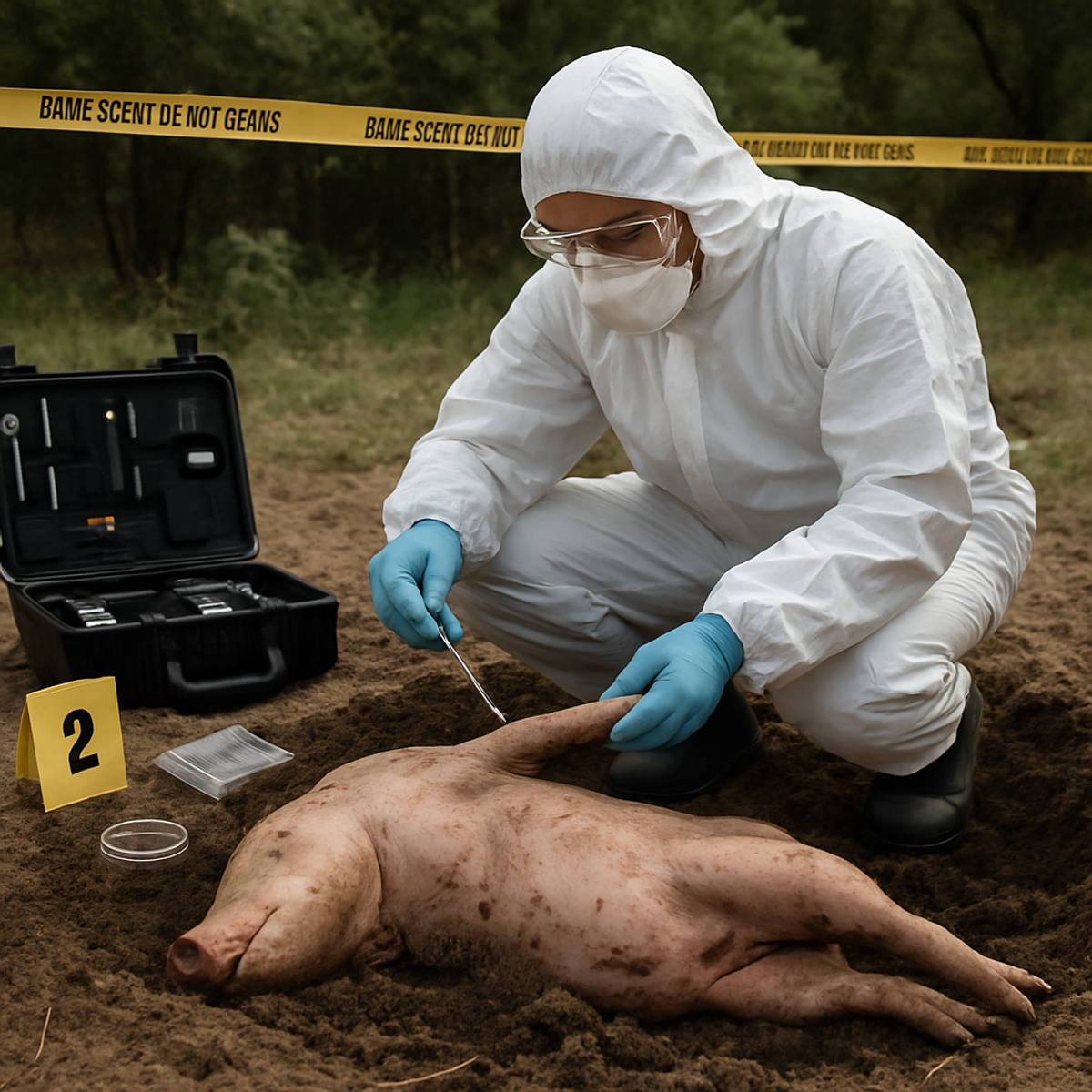
Hey there! Have you ever heard about scientists using pigs to help find missing people? It sounds a bit out there, but it’s happening in Mexico, and it’s making a real difference.
The Heartbreaking Reality
Mexico has a staggering number of missing persons—over 130,000, to be exact. Many of these disappearances are linked to cartel violence, and families are left searching for answers, often with little support. (nbcdfw.com)
Why Pigs?
Pigs are surprisingly similar to humans in terms of anatomy and decomposition processes. This makes them ideal stand-ins for human bodies in forensic research. By studying how pig bodies break down under various conditions, scientists can learn to identify signs of clandestine graves. (phys.org)
The Research in Action
In Jalisco, a state heavily affected by disappearances, researchers have been burying pigs in different ways—wrapped in blankets, burned, or buried alone or in groups. They then monitor these sites using high-tech tools like thermal drones and hyperspectral cameras to detect changes in the soil and vegetation that might indicate a hidden grave. (abcnews.go.com)
Collaboration with Families
What’s truly inspiring is how scientists are working hand-in-hand with families of the missing. These families, often mothers searching for their children, have become experts in identifying potential grave sites. Their firsthand knowledge combined with scientific methods is proving to be a powerful force in the search for the disappeared. (independent.co.uk)
Looking Ahead
While this research is still ongoing, it’s already providing valuable insights. The hope is that these methods will lead to more discoveries, bringing closure to families and holding perpetrators accountable. It’s a poignant example of how science and community can come together to address deep societal issues.
So, next time you hear about pigs in forensic science, remember the incredible work being done in Mexico. It’s a testament to human resilience and the relentless pursuit of justice.




Leave a Reply