
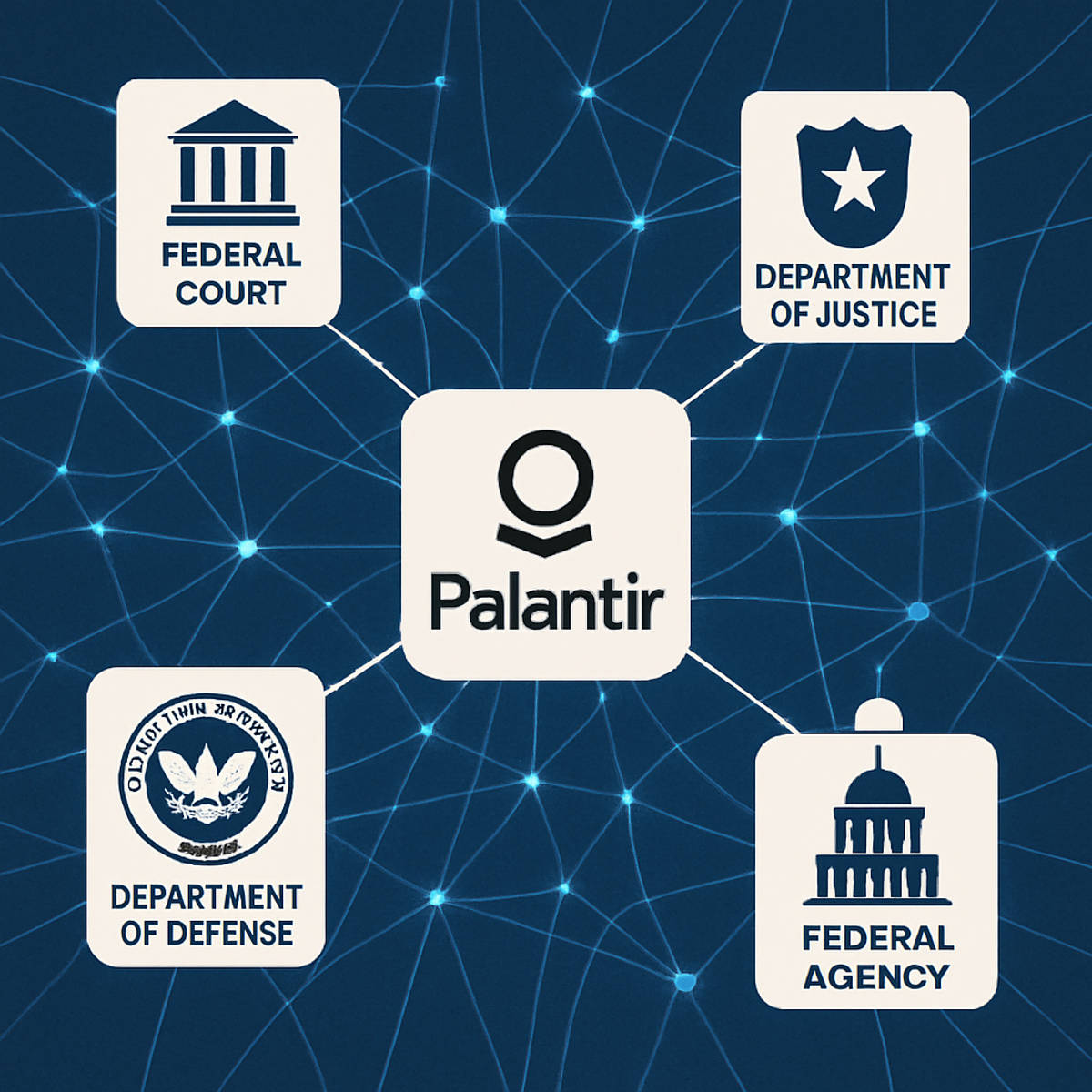
Have you ever wondered how a tech company can become so intertwined with government operations? Let’s talk about Palantir Technologies, a firm that’s been making significant strides in Washington under President Trump’s administration.
Who is Palantir?
Founded in 2003 by Peter Thiel and Alex Karp, Palantir specializes in data analysis tools designed to detect patterns across massive datasets. Their software integrates information from diverse sources like GPS, communications, and legal records to provide intelligence insights. Over the years, they’ve worked with the U.S. military, intelligence agencies, and private corporations. (theweek.com)
A Surge in Government Contracts
Since President Trump took office for his second term, Palantir has secured at least $300 million in new and expanded business. This includes contracts with the Federal Aviation Administration, the Centers for Disease Control and Prevention, and Fannie Mae. Notably, the Pentagon allocated up to $795 million more to the military’s core artificial intelligence software program, the Palantir-built Maven Smart System, to expand its deployment to all U.S. forces worldwide. Additionally, the Army issued Palantir its biggest contract yet—an agreement to consolidate the military’s software procurement over the next decade, valued at up to $10 billion. (washingtonpost.com)
Integration Across Federal Agencies
Palantir’s software isn’t just limited to defense. At the State Department, a Palantir-designed AI system is now assisting in drafting diplomatic cables. The Department of Homeland Security awarded Palantir a $30 million contract to track immigration enforcement. The Internal Revenue Service is also expanding its use of Palantir’s technology to modernize data systems. (washingtonpost.com)
The ‘Revolving Door’ and Political Ties
Palantir’s growth has been bolstered by a ‘revolving door’ of personnel between the company and U.S. government entities. This strategy has fostered extensive influence networks, particularly with the Department of Defense, where Palantir has secured over $1.3 billion in contracts. The company’s lobbying expenditure increased sharply to $5.8 million in 2024, and it established a foundation to shape policy through funded research. Top executives like Thiel and CEO Alex Karp have leveraged political relationships to expand market share, especially under administrations favoring higher national security spending. (ft.com)
Privacy Concerns and Ethical Debates
With great power comes great responsibility—and scrutiny. Palantir’s creation of centralized databases involving citizens’ personal data has triggered privacy concerns and bipartisan alarm about potential abuse and political targeting. Critics warn that the administration’s efforts could lead to a centralized personal data system with few checks on how it’s used, especially with agencies like Immigration and Customs Enforcement and the IRS gaining access to merged datasets. (finblog.com)
Looking Ahead
Palantir’s trajectory in Washington is a testament to how technology companies can become deeply embedded in government operations. As they continue to expand their reach, it raises important questions about the balance between innovation, security, and privacy. It’s a complex dance between leveraging technology for national interests and safeguarding individual rights.
So, what do you think about tech companies like Palantir playing such a pivotal role in government operations? It’s a topic that certainly gives us a lot to ponder over our next coffee chat.




Leave a Reply