
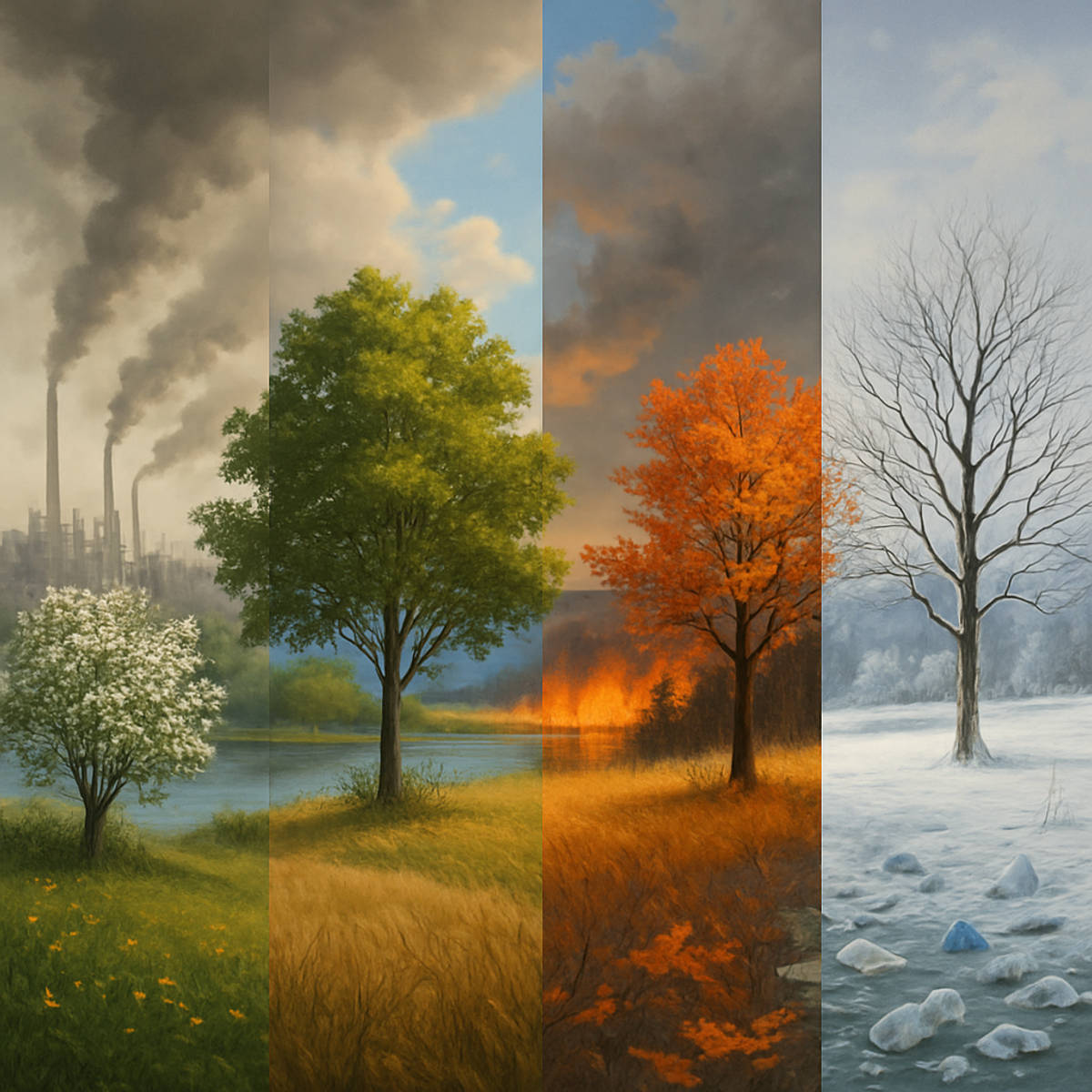
Hey there! Have you ever noticed how the seasons don’t feel quite the same anymore? It’s not just your imagination. Our planet is experiencing some significant shifts, and human activities are at the heart of these changes.
The Emergence of Human-Made Seasons
Traditionally, we’ve had four seasons: spring, summer, autumn, and winter. But now, we’re seeing the rise of entirely new, human-induced seasons. For instance, in parts of Southeast Asia, there’s a “haze season” where the sky is thick with smoke for weeks. This results from large-scale burning of vegetation to clear land for agriculture during dry periods. Similarly, Bali experiences a “trash season” between November and March, when ocean currents bring heaps of plastic waste to its shores. (livescience.com)
The Disappearance of Familiar Seasons
While new seasons emerge, some traditional ones are fading. Winters, for example, are becoming shorter and milder. In the Northern Hemisphere, spring now arrives about 1.7 days earlier than it did in the early 20th century. This shift affects ecosystems profoundly. Plants bloom earlier, which can disrupt the life cycles of pollinators like bees. (time.com)
The Science Behind the Shift
A study published in Geophysical Research Letters found that summers in the Northern Hemisphere have lengthened, while winters have shortened. If current trends continue, by 2100, summer could last nearly half the year, with winter shrinking to less than two months. These changes are primarily driven by greenhouse gas emissions. (agupubs.onlinelibrary.wiley.com)
Real-World Impacts
These shifts aren’t just academic; they’re affecting our daily lives. In Los Angeles, climate change has increased the likelihood and intensity of wildfires. The risk of such fires is now 1.35 times greater due to human-induced climate change. (axios.com)
What Can We Do?
Understanding these changes is the first step. By recognizing the impact of our actions, we can advocate for policies that reduce greenhouse gas emissions and support sustainable practices. It’s about making choices that help preserve the natural rhythms of our planet.
So, next time you notice an unseasonably warm winter day or a sky filled with haze, remember: our actions have consequences. But with awareness and effort, we can work towards a more balanced and sustainable future.



Leave a Reply