
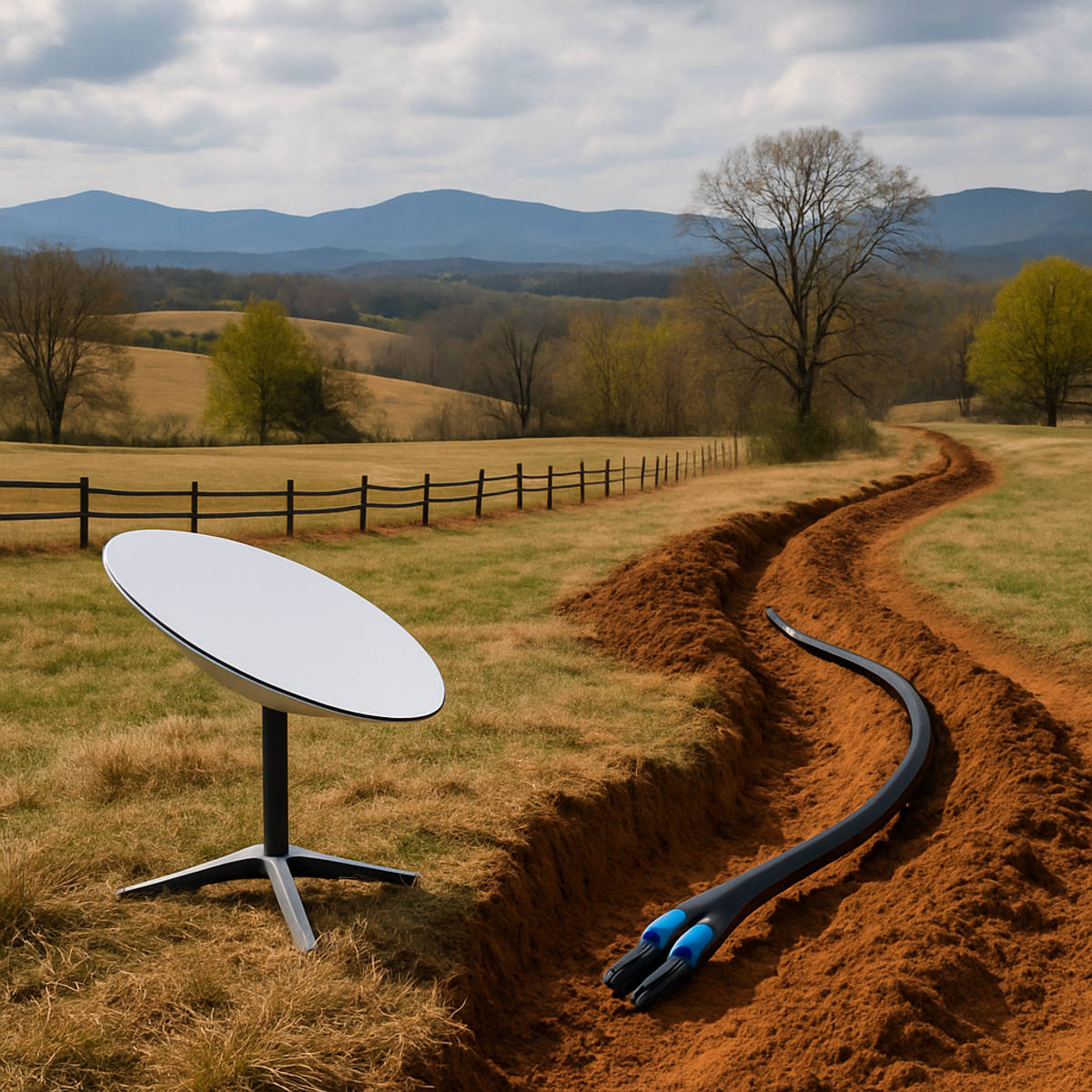
Hey there! Have you ever wondered how rural areas get connected to the internet? Well, there’s a bit of a tussle happening in Virginia that’s worth chatting about. It’s all about how to bring high-speed internet to folks living in the countryside.
The Big Plan
Virginia has this ambitious idea: spend $613 million to lay down fiber-optic cables and get about 133,000 homes and businesses online. Fiber is super fast and reliable, but it’s also pricey and takes time to set up.
Enter Starlink
Now, Elon Musk’s company, SpaceX, has a different take. They’ve got this satellite internet service called Starlink. Instead of digging trenches and laying cables, they beam internet from space. Pretty cool, right? Starlink says they can connect all those homes for just $60 million and do it much quicker. (webpronews.com)
The Debate
So, here’s the rub. Virginia’s sticking to its fiber plan, giving Starlink a tiny slice of the pie—just $3.2 million to connect a few thousand places. Starlink isn’t happy and argues that the state is wasting money by not considering their faster, cheaper solution. (notebookcheck.net)
Why Fiber?
Supporters of fiber say it’s a long-term investment. Once it’s in the ground, it can handle increasing internet demands for years to come. Satellite internet, while innovative, can have issues like slower speeds and interruptions due to weather.
What’s Next?
This isn’t just a Virginia thing. Across the U.S., there’s a bigger conversation about the best way to connect rural areas. Should we go with tried-and-true methods like fiber, or embrace new tech like satellites? The decisions made now could shape how we all get online in the future.
Final Thoughts
It’s a classic case of old school vs. new school. Both sides have valid points, and it’s fascinating to see how technology and policy intersect when it comes to something as essential as internet access. What do you think? Is it better to invest in traditional infrastructure, or should we leap into the future with satellite tech?


Leave a Reply